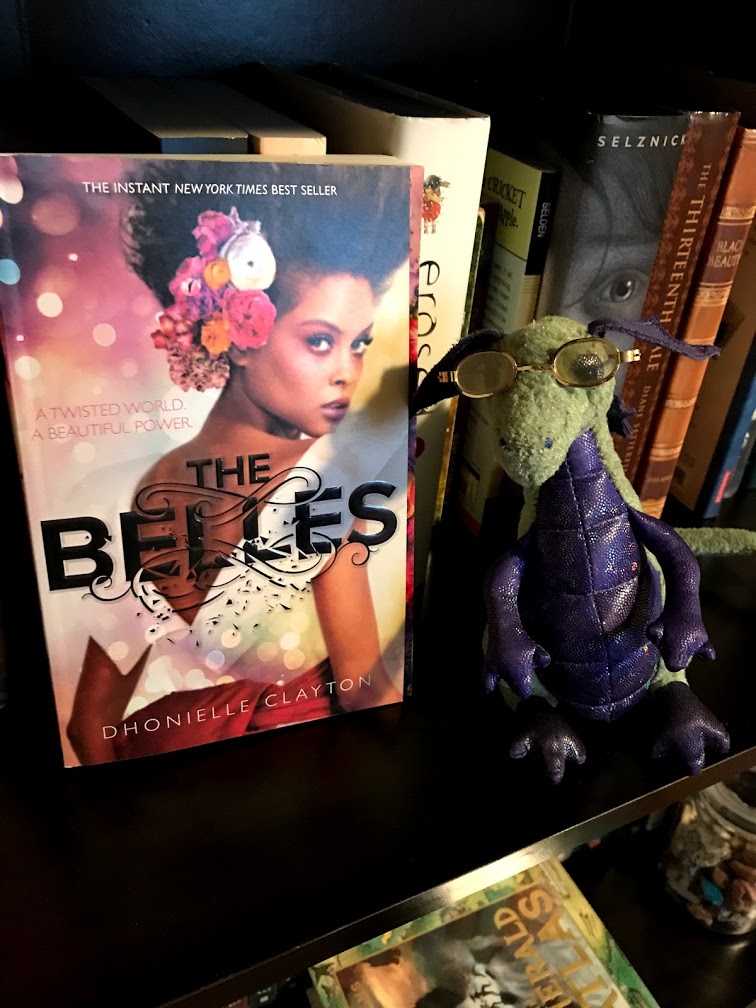

This book was a very beautiful book. There were a great many things that I enjoyed about it and is why it earns its four stars. But of course, like every book, there were something that I didn’t like. This review may contain spoilers.
Likes:
Let me start by giving props to Dhionella Clayton for writing such beautiful descriptions of her world. Most everything that she describes is rich and colorful and full of pretty words. Reading them made me feel like I was eating chocolate. The descriptions only added more to the world’s building, of course, and it allowed me to paint a picture in my head of how lovely the city of Orleans can be.
Character complexity was another big thing that stood out to me in the text. Oftentimes the way that a character appeared was only a mask of who they truly are- evil or otherwise. I found that Remy was one of the most complex characters in the piece since he wore the mask of authority almost every time readers got to engage with him. Then we would see a peek under it and then BAM! Back to being official and following orders. However, this can apply to most of the side characters that we meet, even the ones that we only catch a glimpse of.
This leads me into the very thing that I am such a sucker for. The romantic tension. I love it when characters play hard to get with each other but they allow themselves a moment to enjoy each other’s company. It’s cute and I just gobble that up! The romances that are in this book are not always forbidden, sometimes they can be taboo. Romantic drama is something that I enjoy- in moderation of course.
Finally, I also enjoyed Camiella’s ability to easily bond with people. Granted, this could be because everyone wants something from her so they’ll try to stay on her good side, but I think that she has a bit of a knack for it. After leaving her childhood home and isolation, she is able to go out there and make new friends easily. Its like she can understand that people prefer humanity over beauty in some cases, especially those who are below her rank. It was a trait that I deeply admired in her and one that ended up paying off at the end.
Dislikes:
There are always a few things that I dislike about a text. Even if it is one that I absolutely love. One thing about this text that I didn’t like was Prince’s Sophia. Now, the author did a nice job of writing her, since she is clearly made to be an unlikable character. However, I find that beyond her cruelty to the people around her, Sophia’s weird curiosity of the Belles (I dare say it seemed like more of a fetish) is one that bothered me. And that’s good because she’s a villain and all, but it still bothered me.
SPOILER ALERT: Another thing that I didn’t like was the Queen’s death. I feel like it was too abrupt and mostly there for plot convenience. On top of that, we don’t even get to experience it first hand, we-meaning Camellia- have to read about it in a paper. Her death seemed unnecessary and undignified, given who she is and the respect that I personally had for her. Then to conclude the text with this is just… It didn’t work. I think that if I had more time to cope with it then it would have been better, but the way it was in the book? It was too convenient.
Finally, the last thing that I disliked about this book was how confusing the history of the Belle’s was. It wrapped around in circles with it folding in on itself so much, that I lost track of a timeline. I don’t believe that an info-dump would’ve been a better alternative, but the way it was leached throughout the text and then to come to new revelations while we are still just learning about it is something that I didn’t enjoy. It required me to do a lot of backtracking and re-reading.
All in all, this book was one that I really enjoyed reading. I’m hoping to pick up the second book in this series sometime in the future.


 Miranda Talley's Website
Leave a comment